In an unprecedented move during Missouri high school sports broadcasting, the Missouri State High School Activities Association (MSHSAA) removed a color commentator at halftime of a state championship game and issued a public apology to viewers. The incident, which occurred during the Class 6 football championship between Nixa and De Smet on December 6, 2024, sparked widespread discussion about broadcast standards, professionalism, and the treatment of high school athletes.
The Incident: What Happened During the Broadcast
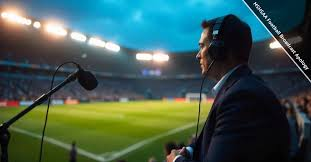
The Class 6 state championship game between Nixa and De Smet began with play-by-play announcer James Stanley and color commentator Cam Thomas in the broadcast booth at Faurot Field in Columbia, Missouri. What should have been a celebratory broadcast of two elite teams competing for a state title quickly devolved into a controversial situation that would make national headlines.
Throughout the first half, viewers who had paid to watch the MSHSAA.tv broadcast began flooding social media with complaints about Thomas’s commentary. The concerns centered on two primary issues: apparent bias toward De Smet, a private St. Louis institution, and overly critical analysis of high school athletes on both teams.
According to the Springfield News-Leader’s review of the broadcast, Thomas was excessively critical of student-athletes on both teams when they made mistakes, at one point calling an incomplete pass on a deep ball “unacceptable”. Rather than presenting the game as a celebration of two accomplished teams reaching the pinnacle of Missouri high school football, the broadcast became a harsh critique of teenage athletes.
The bias became particularly evident in the second quarter. Thomas made a statement that crystallized viewers’ concerns: “This is why you don’t mess with St. Louis private school high school football teams. They’re just so much better in executing”. This comment, delivered during a close game that was tied at halftime, made it clear to many viewers that the analyst had taken a side.
The Unprecedented Apology
What happened at the start of the second half was virtually unheard of in high school sports broadcasting. Dr. Jennifer Rukstad, the MSHSAA Executive Director, personally joined the broadcast at the beginning of the third quarter to address the situation.
Rukstad’s statement was direct: “I wanted to talk to everyone who purchased this broadcast: We needed to make a change here at halftime. I want you to hear my personal apology about some of the things that were communicated in the first half. I wanted to let all of our viewers know that our members are all in equal standing. We wanted to let our viewers know that we take our broadcast seriously”.
Thomas was removed from the broadcast booth, and Stanley finished calling the game alone. For an executive director to personally interrupt a state championship broadcast to apologize and announce a personnel change mid-game demonstrates just how serious MSHSAA considered the situation.
Why This Removal Was So Rare
Broadcaster removals during live events are extraordinarily uncommon, particularly in high school sports. One sports journalist covering the incident could recall only one other similar situation in their career: when Cincinnati Reds announcer Thom Brennaman was caught using a homophobic slur on a hot microphone and apologized during a home run call before being fired.
The MSHSAA situation differed significantly. Thomas didn’t say anything that would typically result in immediate termination, but rather delivered an unprofessional broadcast with unmistakable bias in a state championship game that was supposed to be neutral, while being overly critical of high school students.
For MSHSAA to make such a dramatic decision during the game itself, rather than addressing it afterward, indicates the volume and credibility of complaints received during the first half must have been substantial.
The Problematic Commentary in Detail
Those who were able to review the first-half broadcast before MSHSAA removed it from their website described several concerning patterns:
Bias Toward De Smet: The commentary consistently favored De Smet despite the game being tied for most of the first half. Thomas’s tone, analysis, and praise were disproportionately directed toward the St. Louis private school, creating an uneven listening experience for viewers expecting neutral coverage.
Overly Critical Analysis: Rather than celebrating the achievements of two teams that had fought through entire seasons to reach this moment, Thomas overanalyzed every play with a harshly critical eye. High school athletes were subjected to the kind of scrutiny typically reserved for professional or high-level college players.
Treatment of Nixa’s Quarterback: Thomas was particularly critical of Nixa sophomore quarterback Adam McKnight’s inexperience. Industry professionals later pointed out that McKnight should have been praised for the remarkable achievement of leading his team to an undefeated season and a state championship appearance as a young multi-sport athlete, rather than being criticized during the biggest game of his high school career.
“First Take” Style Commentary: One veteran broadcaster described Thomas’s approach as treating the in-between moments of each play “as if he was on ESPN’s ‘First Take,'” noting that it was “pretty amateurish in the way it was presented and in how the opinions were presented”. A state championship high school game required even-handed presentation, not hot-take debate show rhetoric.
Community Reaction and Social Media Response
The complaints came swiftly and from multiple sources. Journalists covering the game reported their phones and social media mentions were “flooded with complaints” during the first half, mostly from Nixa fans but also from people in the region without any connection to the Eagles.
The social media reaction was strong enough to prompt immediate action. In today’s digital age, where viewers can instantly share their concerns across multiple platforms, the volume and consistency of complaints made it impossible for MSHSAA to ignore the problem.
Many fans expressed appreciation for MSHSAA’s willingness to act quickly. One forum user noted their shock when the second half began with Rukstad’s apology, stating they gave “kudos to MSHSAA for owning it and apologizing.” The swift action stood in contrast to many organizations that might have waited until after the game to address such concerns.
The Private School vs. Public School Dynamic
The incident touched on a sensitive topic in Missouri high school sports: the perceived competitive advantages of private schools versus public schools. Thomas’s comment about not messing with St. Louis private school football teams struck a particularly sensitive nerve because it played into existing tensions within Missouri’s high school sports landscape.
De Smet, located in St. Louis, is one of Missouri’s elite private schools with a strong football tradition. Nixa, from southwest Missouri, is a public school that had achieved an undefeated season and was appearing in its second-ever state championship game. For a neutral broadcaster to suggest one category of school was inherently superior during a championship game broadcast was seen as both unprofessional and disrespectful to public school programs across the state.
What Broadcasting Professionals Said
Veteran Missouri broadcasters weighed in on what went wrong and what standards should apply to high school championship broadcasts.
Corey Riggs, an experienced broadcaster with over a decade of calling state championship games for MSHSAA and who will be inducted into the Missouri Sports Hall of Fame, emphasized the importance of perspective. “It’s just about perspective at the end of the day and your perspective in those games should be positive. It is and always has been about the kids, or at least it should be,” Riggs explained.
The consensus among professionals was clear: high school broadcasts require a different approach than professional sports coverage. These are minors, often experiencing the biggest moments of their athletic careers. The role of broadcasters is to celebrate their achievements and provide context, not to tear down their performances with harsh criticism or show favoritism.
The Aftermath and Broadcast Removal
MSHSAA removed the game broadcast from their website shortly after it concluded. When they eventually re-uploaded it, all audio from the first half had been removed, making it difficult for those who missed the original broadcast to understand the full extent of the problems.
This decision to scrub the audio, while understandable from a damage control perspective, also made it challenging for the public to fully assess what occurred. Those who did hear the original first half could attest to the issues, but the lack of available evidence prevented wider analysis.
De Smet ultimately won the game 35-20, capturing the school’s third state championship. Nixa’s hopes of completing a perfect season fell short, though the team and its players performed admirably throughout the contest.
Who Is Cam Thomas?
Limited public information is available about Thomas’s broadcasting background. He had previously called Lincoln men’s basketball games alongside Stanley dating back to at least 2019. Thomas is described as a young broadcaster in his 20s who has called games across Missouri, including multiple non-MLB games on MLB Network, high school games for Mediacom, and Western Illinois and Lincoln basketball.
His résumé included enough experience to make MSHSAA’s hiring decision understandable on paper. The incident appears to represent a significant professional setback for a young broadcaster early in his career.
Thomas declined to comment when contacted about the incident.
Industry Perspectives on Second Chances
Despite the controversy, several industry professionals suggested Thomas deserved an opportunity to learn and grow from the experience. One analyst noted that “Thomas has talent but chose the wrong night to have a bad one. He’s young, and this will follow him for a while. I believe he should get another opportunity in the near future, and I hope he improves in pursuit of his broadcasting dreams”.
This perspective reflects a balanced view: acknowledging the serious nature of the mistakes while recognizing that young professionals can recover from errors in judgment, particularly when those errors don’t rise to the level of offensive or discriminatory language.
Broader Implications for High School Sports Broadcasting
The incident raises important questions about standards and training for high school sports broadcasters:
Vetting and Training: How thoroughly should organizations like MSHSAA vet commentators for their biggest events? What training should be provided about appropriate tone and approach for high school athletics?
The High School Standard: Broadcasting professionals agree that high school sports require a different approach than college or professional coverage. The emphasis should be on celebration, context, and education rather than harsh critique. How can this standard be better communicated and enforced?
Real-Time Monitoring: Should championship broadcasts include producers or supervisors actively monitoring content in real-time to catch and address problems before halftime?
Response Protocols: MSHSAA’s swift action was praised, but should there be established protocols for addressing broadcast problems during games?
Similar Incidents in High School Sports
While rare, this wasn’t the only recent controversy involving high school sports broadcasts. In Kansas, the National Federation of State High School Associations (NFHS) Network apologized for inappropriate comments made during a 4A girls state soccer game in May 2024, with the production affiliate terminating its relationship with the announcer involved.
These incidents highlight ongoing challenges in maintaining professional standards across the fragmented landscape of high school sports broadcasting, where coverage quality can vary dramatically between professional productions and less experienced operators.
What MSHSAA Said Moving Forward
In the days following the incident, MSHSAA reaffirmed its commitment to providing quality, professional broadcasts of its championship events. The organization’s willingness to take immediate action during the game, rather than waiting for post-game analysis, demonstrated a commitment to its member schools and the families who paid to watch the broadcast.
The incident served as a reminder that championship broadcasts represent not just athletic competitions, but significant life moments for teenage athletes, their families, and their communities. The responsibility to treat these occasions with appropriate respect and professionalism falls heavily on everyone involved in producing the coverage.
Lessons Learned
Several key lessons emerged from the MSHSAA broadcast controversy:
- High school athletes deserve respectful coverage: These are minors experiencing once-in-a-lifetime moments. Broadcasters must balance analysis with celebration and maintain an age-appropriate perspective.
- Neutrality is non-negotiable in championship games: When an organization like MSHSAA produces official championship broadcasts, apparent bias toward either team undermines the integrity of the coverage and the perceived fairness of the event.
- Social media amplifies issues rapidly: In the modern era, problems with broadcast quality or professionalism can’t be ignored or addressed slowly. Organizations must be prepared to respond in real-time.
- Accountability matters: MSHSAA’s willingness to take responsibility and act decisively, even during the game itself, set an important example for how organizations should handle mistakes.
- Professional standards must be maintained: Having broadcasting experience doesn’t automatically mean someone is prepared for the specific challenges and responsibilities of calling championship high school events.
The Game Itself
Beyond the broadcast controversy, the game featured high-level football between two accomplished programs. De Smet entered with a 12-1 record, while Nixa came in at 13-0, seeking to cap a perfect season with the program’s first state championship.
The game was competitive throughout, tied 14-14 at halftime. De Smet’s defense made crucial stops in the second half, including a fourth-down sack of McKnight late in the game with Nixa threatening to tie the score. A 70-yard touchdown run sealed the 35-20 victory for De Smet.
Both teams featured college-bound talent and had navigated challenging schedules to reach the championship. The players on both sides deserved better than to have their championship experience overshadowed by broadcast controversy.
Where Things Stand
The MSHSAA football broadcast incident of December 2024 will likely be remembered as a case study in both what can go wrong with high school sports coverage and how organizations can respond appropriately when problems arise.
For Cam Thomas, the incident represents a significant professional challenge early in his broadcasting career. Whether he receives another opportunity and how he responds to this setback will determine his trajectory in the industry.
For MSHSAA, the swift action and public accountability demonstrated a commitment to its values and member schools, even when it meant making an uncomfortable mid-game decision on the organization’s biggest stage.
For high school sports broadcasting more broadly, the incident serves as a reminder of the unique responsibilities that come with covering amateur athletics involving minors. The standard must remain high, the approach must stay positive, and the focus must always center on celebrating the achievements of young athletes rather than subjecting them to professional-level criticism.
As Missouri high school football moves forward into future seasons, this incident will hopefully result in improved vetting, training, and standards that ensure championship broadcasts live up to the significance of the occasions they cover and the young athletes they feature.
The December 6, 2024 Class 6 state championship saw De Smet defeat Nixa 35-20, but the game will be remembered as much for the unprecedented broadcast controversy as for the on-field competition. MSHSAA’s response—removing a commentator at halftime and issuing a personal apology from its executive director—set a new standard for organizational accountability in high school sports broadcasting.